Recife, located in Pernambuco in Brazil’s northeast, is a city that came into being during the colonial era. The city is home to a diverse range of cultures, illustrating Brazil’s history of immigration, and this dynamism is illustrated through not only Recife’s music, architecture, folk crafts, but also its cuisine.
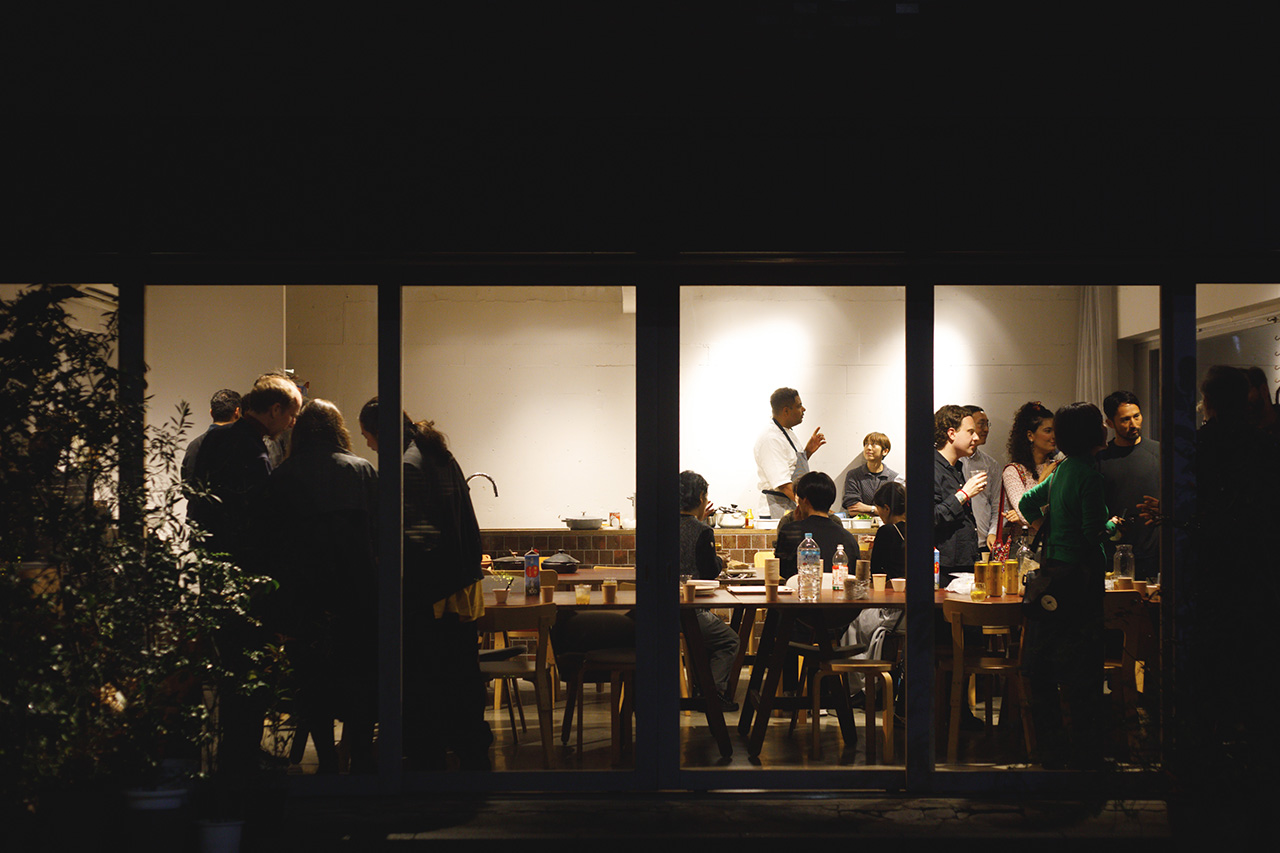
With Hamacho Liberal Arts (a study group based in Hamamatsucho, Japan, hosted by architectural firm o+h), I helped to arrange a workshop with Jonathas de Andrade, a Brazilian artist from Recife, and musician Homero Basílio. During this time, Thiago Das Chagas, a chef who has a restaurant in Recife and who engages in many food-related projects, was also in Japan, and he cooked up a number of dishes from Pernambuco.
On the day of the meal, we first headed to the fish market. Thiago, who arrived slightly earlier than our agreed meeting time, was full of energy as he went around the store. He quickly assessed the ingredients’ numbers and flavors in his head, checked the fish’s weight and quality with his hands, and scratched out the cooking schedule with his toe. The fish found in the Pacific Ocean are different to those the fishers of Recife find in the Atlantic. With a keen eye, Thiago checks the fish, seaweed, shells, and small fry—it’s as if this trip to Japan has opened another door of culinary possibility within him.
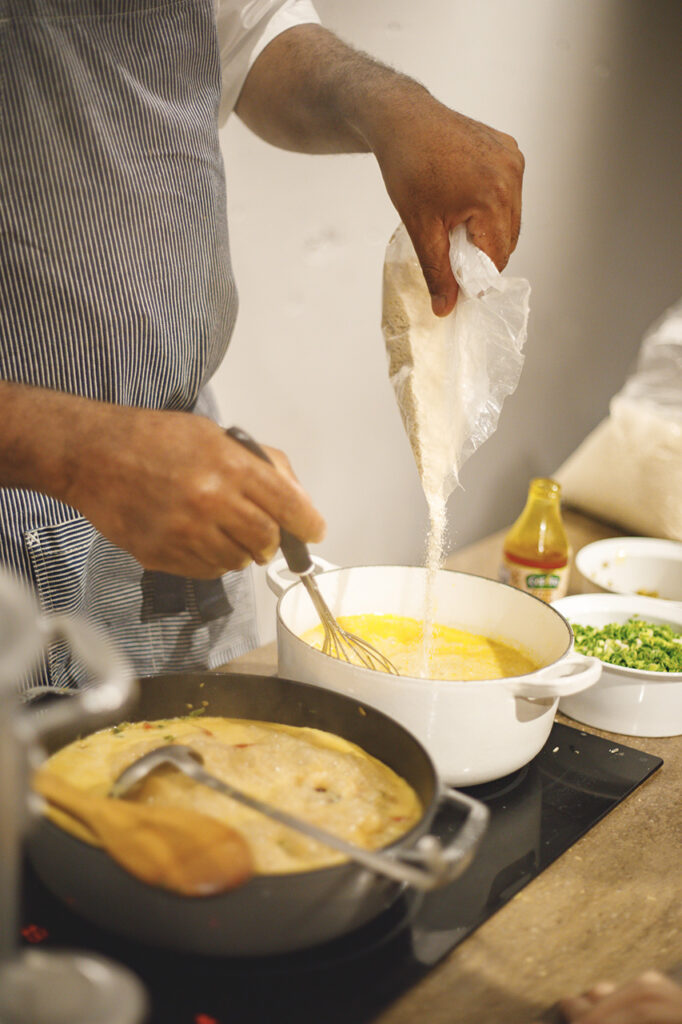
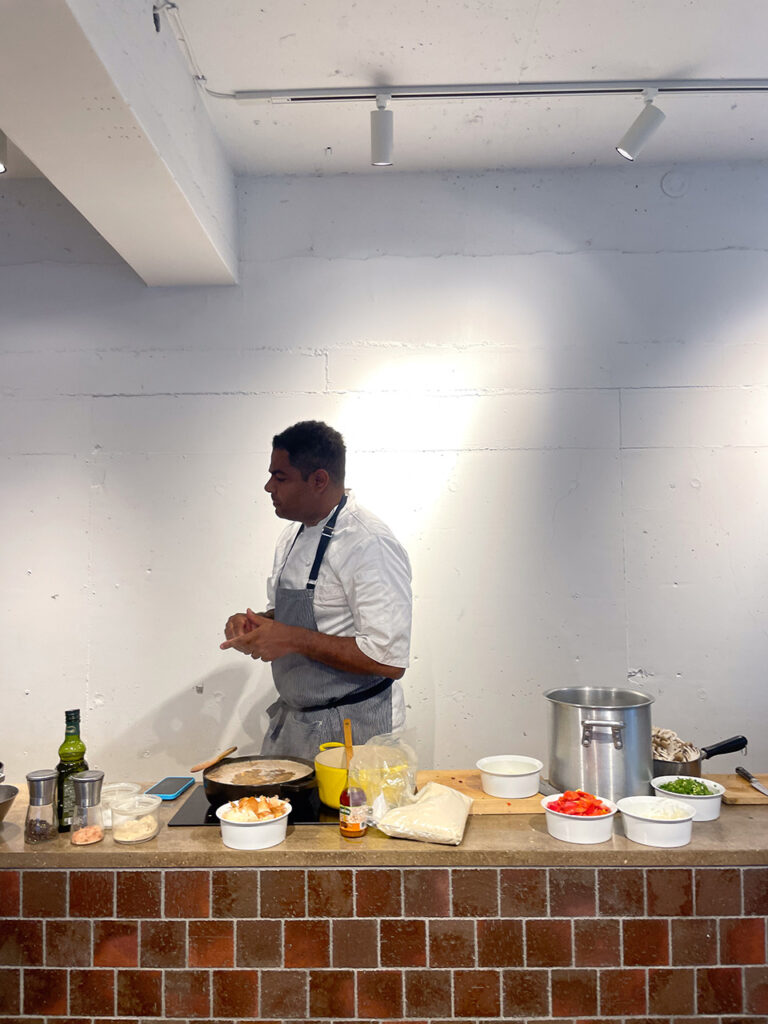
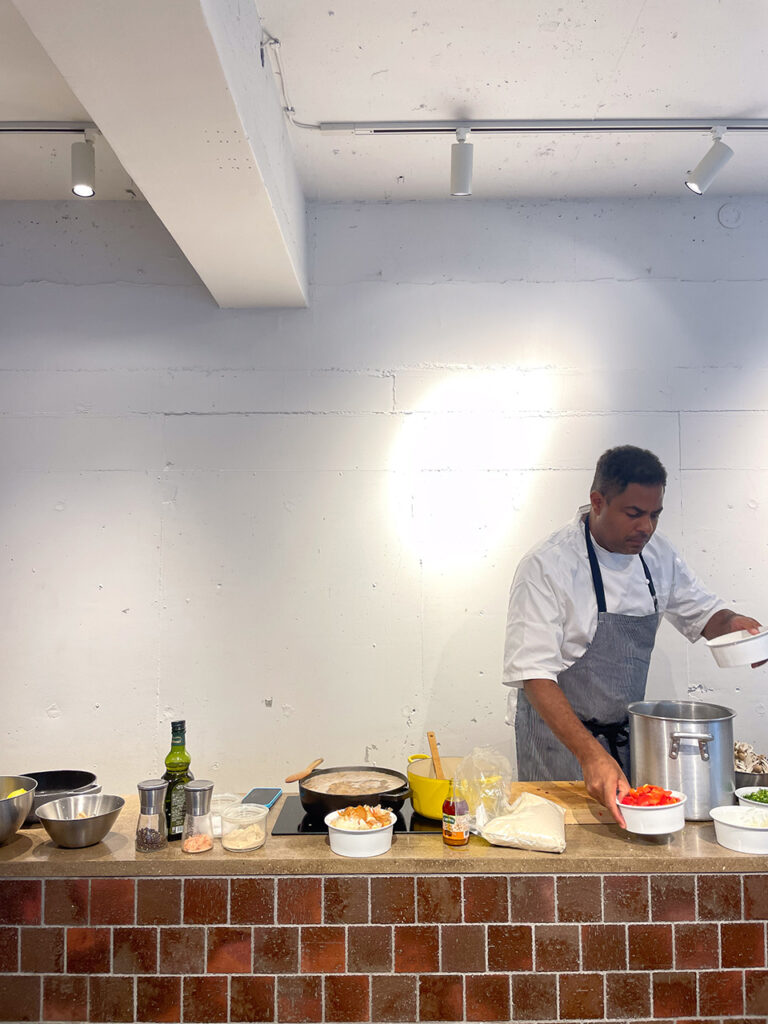
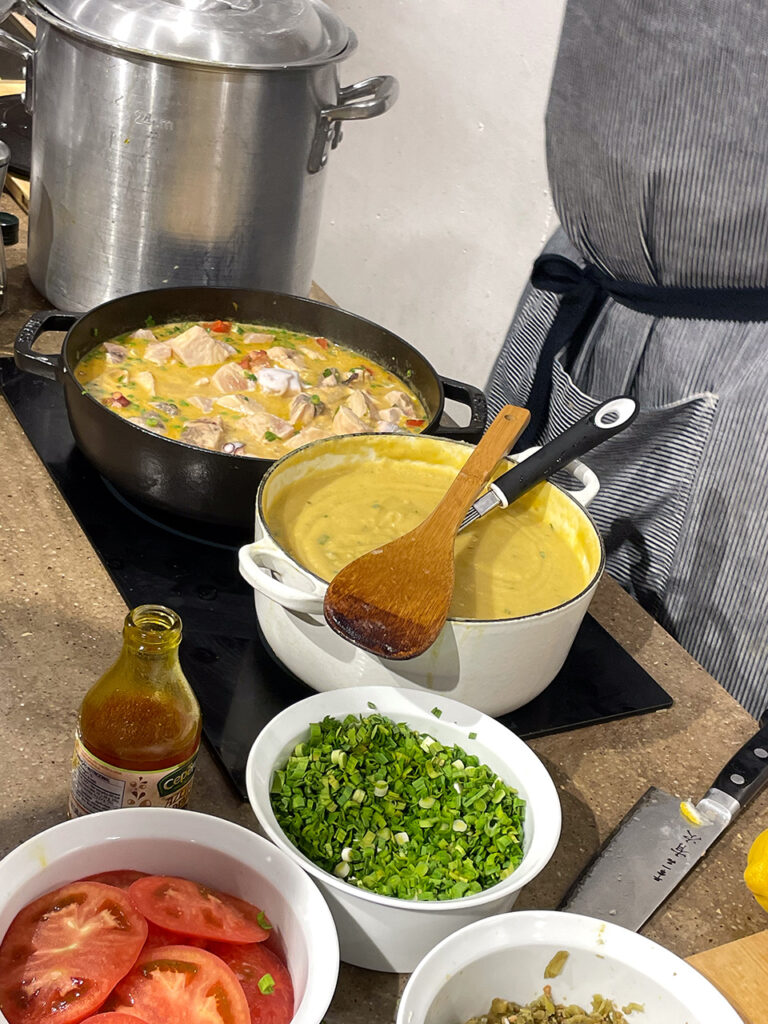
After the shopping is complete, we move to the kitchen. Thiago sets to the task of cutting the vegetables with a steady rhythm. The menu contains dishes from Brazil’s northeast: moqueca de peixe, cashew nut soup, and caipirinha. Moqueca is a type of seafood stew that uses coconut milk. The name comes from an African word which refers to a slow-cooked stew and is cooked in a clay pot called a mouquequeira. The ingredients for tonight’s stew are marlin and octopus—oily seafood which can withstand being cooked for many hours. Brazil is rich in different cultures—the proximity of the Amazon means that the north has indigenous culture, the southern part has European culture, and the northeastern region, particularly Bahia, has African culture. People say that the meeting of these peoples of different cultures is represented in Pernambuco’s cuisine.
The dishes are a range of different colors—the pimenta peppers are red and green, the dendê oil, made from coconuts and an indispensable part of the region’s cooking, is yellow, and the farofa, made from cassava flour, is white. The colors remind me of my trip to Recife—it isn’t just the clothes of passersby and the lively paintings on city walls that contain this vibrant palette of reds, blues, yellows, and greens, but also the dishes that decorate the table.
Continue to Part.2
Yoshiko Nagai
Curator / Producer
She is involved in a wide variety of content creation and development from exhibitions, event preparation, to writing and editing. Some of her recent work includes Water Calling, a project which focuses on Kyoto’s groundwater and water landscapes, and Hamacho Liberal Arts, a joint project with o+h architects. Her hobby is languages. She is often in transit, thinking while she travels. https://materiaprima.site
Subsequence.tv uses cookies to personalize and deliver appropriate content, analyze website traffic and display advertising. Visit our site policy to learn more about cookie. By clicking "Accept" you agree to our terms and may continue to use Subsequence.tv.