I recently watched a number of films by the artist Kosuke Nagata at PolePole Higashi-Nakano. Whether through film, performance, or installations, works that use the theme of “eating” to relate stories related to politics, geography, or history, can be used to consider contemporary societal issues such as inequality and systems related to capitalism.
The room was filled with the crackling sound of bubbles breaking forth from liquid. Inside the liquid on the screen, were foaming grains of rice. As I watched, I wondered if I’d ever watched food change in this way from so close up before. In that dark room, the sound as the rice fermented was raw, full of energy, and reverberated right to my core. “Fire in Water” is a video installation that explores the origins of rice and koji which are used to make makgeolli. Even though makgeolli is one of Korea’s most famous alcoholic drinks, Japan has played a role in its history.
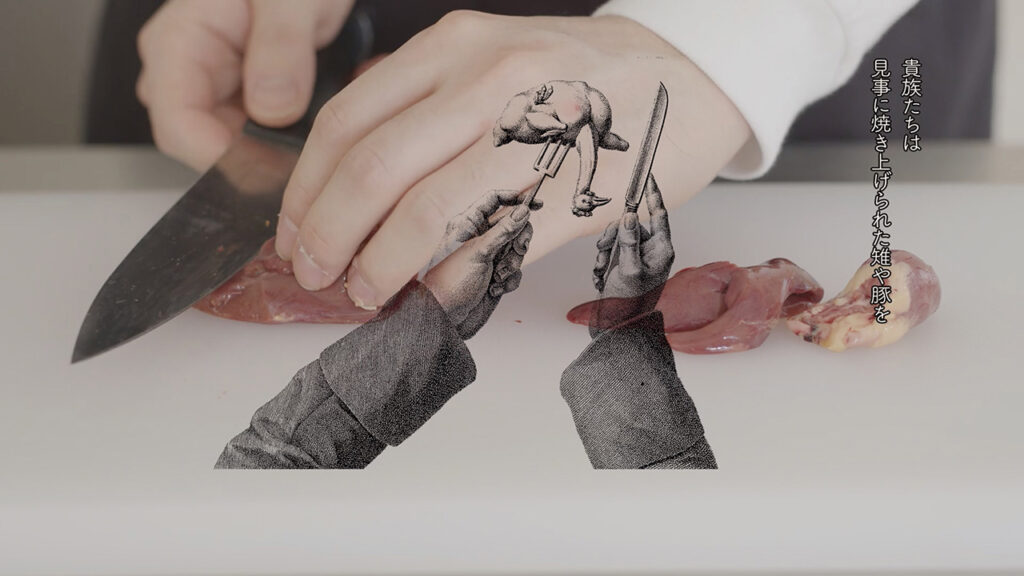
“Purée” follows the culinary technique of the same name which involves completely transforming meat or vegetables into a different form. Food processors have made this process a lot easier today compared to the past. Whereas it was once a popular meal among French aristocracy who had their servants perform the laborious process, people now view it as a meal to help care for people with problems chewing.
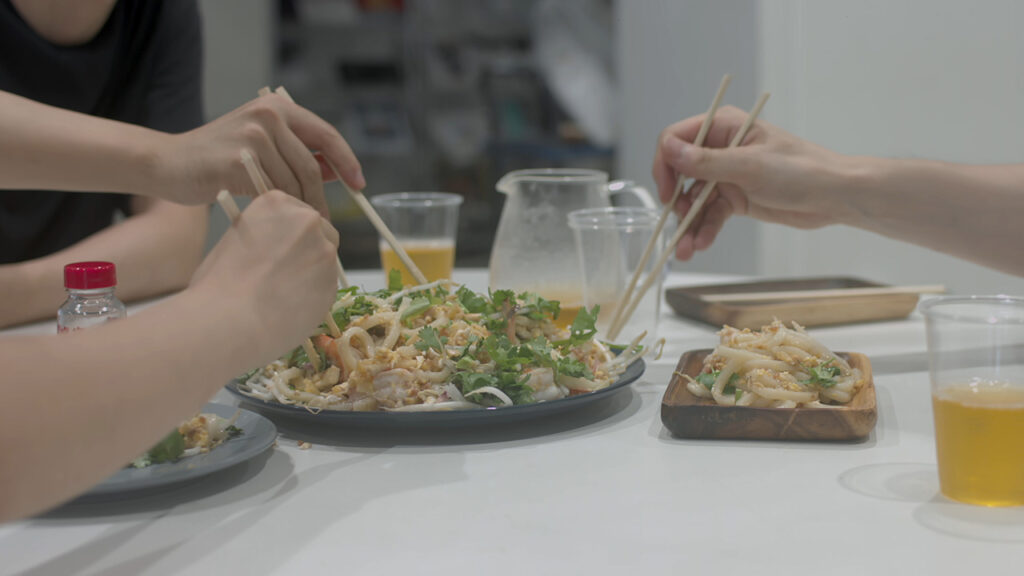
Even among dishes which are well-known around the world, there are very few cases where there are strict definitions on what constitutes them. An example of this is pad thai and yakisoba which are both types of fried noodles. Across China and Southeast Asia, there are dishes which have the same name but which utilize different noodles or ingredients. As people migrated, they used the ingredients available to them to recreate dishes from their memories. In “Translation Zone”, the dynamism of words brought about by human migration is shown through the food that passes through the same mouths which are used for speech.
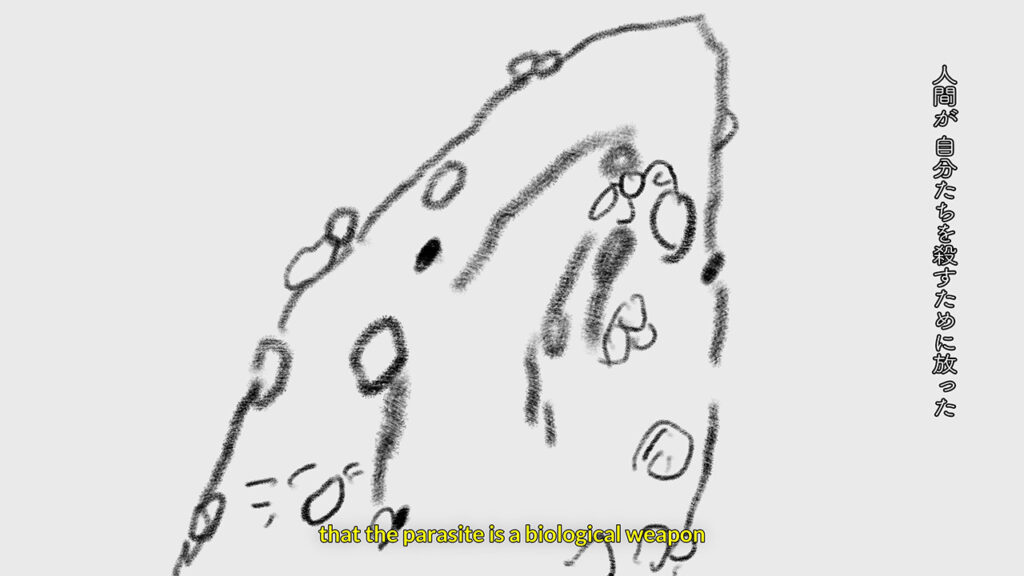
On screen, an old man removes parasite-infected salmon from the salmon farming facility. “Becoming Salmon” is an animated film that depicts that destruction and burial of dead salmon in a raw way. It’s a grotesque topic even if you simply hear the description without seeing the images on screen, but the film discusses a foodstuff that many of us eat regularly. The message is made all the more striking by the film’s simple linework.
With the simple narration and on-screen images—hands, ingredients, food—my thoughts crossed seas and journeyed to the past even despite the closed interior space of the kitchen. Food contains a history where people have changed their methods and ingredients in order to eat and survive.
After watching the films, I opened my fridge when I got home. The ingredients were like a black box to me—I didn’t know the origins of barely any of them. Confronting this is to question by who and by what we are kept alive.
Yoshiko Nagai
Curator / Producer
Founder of the production label Materia Prima. Based on field work, her production work focuses on the relationship between nature, resources, and people. Her hobby is studying languages. She is often in transit, thinking while she travels. https://materiaprima.site
Subsequence.tv uses cookies to personalize and deliver appropriate content, analyze website traffic and display advertising. Visit our site policy to learn more about cookie. By clicking "Accept" you agree to our terms and may continue to use Subsequence.tv.